
The usual suspects behind a smudged line
If your eyeliner ends up under your eyes by lunchtime, the cause is usually one of three things: oil on the lids, a formula that never fully sets, or a tool that lays down too much product at once. None of these are about your technique being 'wrong' — they are about matching the product and the prep to the way your skin behaves.
The fix starts with identifying which of these is happening to you. A quick test: apply your liner as usual on bare lids and check it after two hours. If it has migrated, your lids are likely oily or your formula is not waterproof. If it looks faded but has not moved, the issue is more about pigment payoff than smudging.
Three common eyeliner mistakes to avoid
- Skipping lid prep: Applying liner directly onto moisturiser or natural oils gives the pigment nothing to grip. A light dusting of translucent powder before liner helps create a dry base — but do not overdo it, or the liner can skip.
- Using a creamy pencil without setting it: Creamy pencils are comfortable but stay movable. If you love that texture, set the line with a matching powder shadow or a thin layer of translucent powder pressed over the top.
- Layering too much product at once: Thick layers take longer to dry and are more likely to crease. Build your line in thin passes, letting each one set for a few seconds before adding more.
Why a waterproof felt-tip pen solves many smudging problems
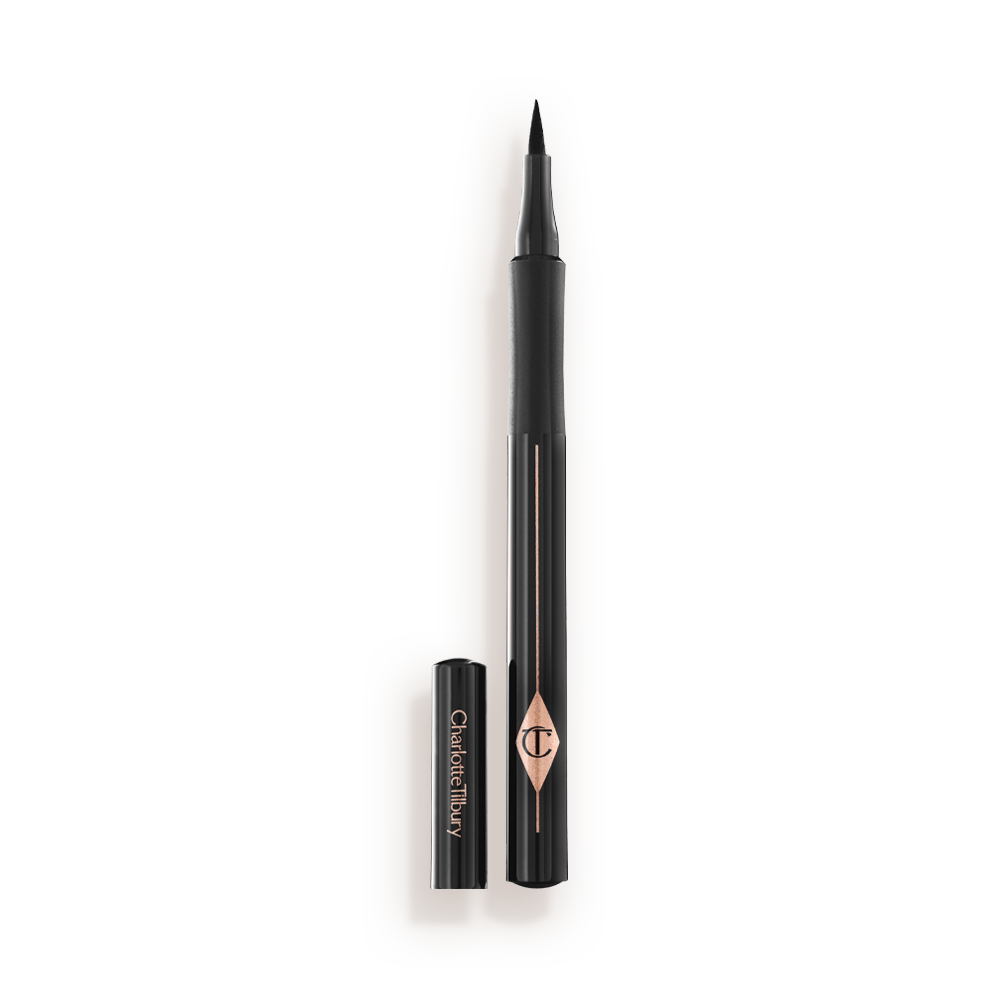
A waterproof liquid liner pen like The Feline Flick - Panther is designed to resist smudging and fading once it has set. The felt-tip applicator gives you controlled application, so you can draw a thin line close to the lashes and build a flick without flooding the lid with product. That control matters: the less excess formula you put down, the less there is to migrate.
This does not mean every waterproof liner is right for every person. If your eyelids are very oily, even waterproof formulas can break down over a long day. But for many people, switching from a soft pencil to a waterproof pen is the single biggest change they can make.
Product facts: The Feline Flick - Panther
- THE FELINE FLICK - PANTHER: Black waterproof liquid eyeliner pen designed for precise, dramatic lines. Waterproof helps resist smudging and fading, while the pen format gives you control over how much product you apply.

THE FELINE FLICK - PANTHER - THE FELINE FLICK - PANTHER: Liquid eyeliner pen for controlled application. A controlled tip lets you draw a thin, even line rather than a thick layer that takes longer to set and is more prone to creasing.
- THE FELINE FLICK - PANTHER: Designed to create a classic feline flick look. If your goal is a sharp flick that stays put, this pen is built for that specific shape.
How to stop eyeliner smudging: a practical routine
- Start with a clean, dry lid: Cleanse and gently pat dry. Avoid applying heavy eye cream right before liner — give it a few minutes to absorb, or apply liner first and eye cream later.
- Set the base lightly: Dust a small amount of translucent powder over the lid and along the lower lash line if that is where you smudge. This gives the liner a surface to grip.
- Draw thin, buildable lines: Use the felt-tip pen to sketch a thin line, then add a second pass once the first has set. This is easier to control than one thick stroke.
- Let it set before opening your eyes wide: Waterproof formulas need a moment to dry. Keep your eyes relaxed for a few seconds after application to avoid transferring wet liner onto the crease.
- Set with a matching powder if needed: For extra insurance, press a tiny amount of black or dark brown eyeshadow over the liner with a small brush. This is optional but can help on very oily lids.
Eyeliner for oily eyelids: what to look for
If your eyelids are oily, look for formulas explicitly described as waterproof or long-wearing. The Feline Flick - Panther is described as waterproof to resist smudging and fading, which makes it a reasonable candidate. However, no product can guarantee zero smudging for every skin type — the supplied information does not include specific instructions for oily lids or setting techniques beyond the waterproof claim.
A practical approach is to test any new liner on a day when you are mostly at home. Apply it in your usual way and check after two, four, and six hours. That tells you more about your own skin than any general claim.
When the problem is not the liner
Sometimes smudging comes from outside the eyeliner itself. Rubbing your eyes, using a heavy eye cream, or applying too much concealer near the lash line can all encourage migration. If you have tried a waterproof pen and still see smudging, check whether your skincare or base products are creeping up into the eye area.
Also consider the shape of your eyes and how you apply liner. A very thick line on a hooded lid can transfer onto the crease when you blink. In that case, a thinner line placed closer to the lashes — which a fine felt tip makes easier — may solve the problem without changing products.

