
The core difference: a brush needs product, a felt tip carries its own
A winged liner tool generally falls into two camps: a brush that you dip into a separate liner formula, or a felt-tip pen that holds its own ink. That difference shapes everything about how the tool feels in your hand and how much control you have over the final wing.
A brush gives you flexibility because you choose the formula and reload as you go. A felt tip is more self-contained and often more familiar if you already write with pens. Neither is automatically better; the right choice depends on your preferred liner texture, your patience for setup, and how precise you need the wing to be.
Brush vs felt tip at a glance
- Product setup: A brush requires a separate gel, cream or liquid liner to load the bristles. A felt-tip pen is usually ready to use on its own.
- Control at the wing tip: A fine brush can taper a wing very sharply if you have a steady hand and the right formula. A felt tip offers a consistent, pen-like point but may not taper as finely depending on its shape.
- Learning curve: Brushes ask you to manage product load and angle, which can take practice. Felt tips are often more forgiving for beginners because the tip shape does some of the work.
- Formula compatibility: A brush works with any gel, cream or liquid liner you choose. A felt tip is matched to its built-in formula, so you cannot swap textures.
- Cleaning and upkeep: Brushes need regular washing to keep bristles clean and shaped. Felt tips are generally not washable in the same way and may dry out over time.
When an eyeliner brush makes sense
Choose a brush if you like gel or cream liners and want to control the intensity of each stroke. A brush also lets you build a wing gradually, which helps if you prefer a softer or more diffused line rather than a sharp graphic edge.
For precise wing application, a brush with a fine point gives you the ability to place the tip exactly where you want the wing to end, then connect it back to the lash line. That said, the brush is only half the equation; the formula's consistency and your own hand stability matter just as much.
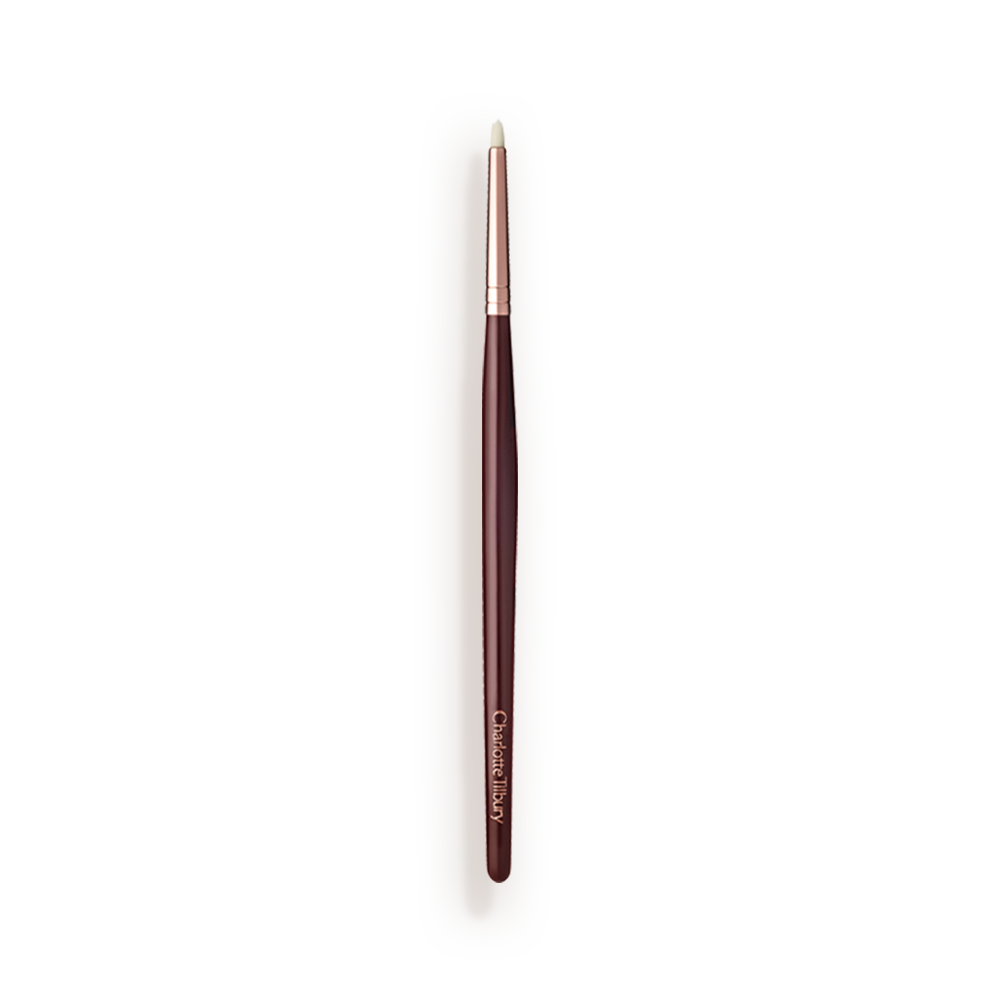
A brush built for liner work: Charlotte Tilbury EYE LINER BRUSH
- EYE LINER BRUSH - ROSE GOLD & NIGHT CRIMSON: Designed for eyeliner application with a rose gold and night crimson finish. If you are leaning toward a brush, this is a dedicated liner tool rather than a general-purpose makeup brush, so its shape is intended for the fine work a wing requires.

EYE LINER BRUSH - ROSE GOLD & NIGHT CRIMSON
When a felt tip is the better fit
A felt tip suits you if you want a one-step tool that travels well and does not require a separate pot or palette. It is also a reasonable starting point if you are still developing your wing technique, because the tip's fixed shape gives you a consistent point of contact.
The trade-off is less flexibility: you are committed to the pen's formula and tip shape, and once the tip dries out or frays, the tool is usually finished. If you like to change liner textures often, a brush may serve you better.
How to choose an eyeliner brush for wings
If you decide to go the brush route, these practical checks will help you pick one that supports precise wing application.
- Look for a fine, tapered tip: A pointed brush lets you draw a thin line and sharpen the wing's end. Very thick or flat brushes are better for smudging than for a crisp wing.
- Match the brush to your formula: Gel and cream liners generally need a brush with enough structure to move the product without absorbing it all. Very runny liquids may need a different brush style; check the liner's own instructions if supplied.
- Check the handle length: A handle that feels balanced in your hand improves control. If you are a beginner, a slightly longer handle can help you rest your hand on the face for stability.
- Consider cleaning practicalities: Brushes used with gel or cream liner need regular cleaning to prevent buildup. Choose one you can comfortably wash and reshape.
A realistic note on technique and missing details
Neither tool guarantees a perfect wing on the first try. The supplied product information for the Charlotte Tilbury EYE LINER BRUSH does not include specific application instructions, bristle measurements, or care steps, so treat any general brush advice as a starting point rather than a manufacturer's instruction. If you need exact guidance for a particular liner formula, refer to that product's own directions.
For beginners, a felt tip may feel more approachable, while a brush rewards practice with more control over texture and shape. If you already own a gel liner you love, a dedicated brush like the EYE LINER BRUSH is the natural pairing. If you want a single tool for touch-ups on the go, a felt tip is simpler to carry.

