
Quick Answer
Most Beauty Light Wand problems come from three things: applying to skin that isn't fully dry or prepped, using too much product in one spot, and blending with the wrong motion. Use a small amount, tap rather than sweep, and build in thin layers. If your highlighter still separates over a specific base product, that pairing is the problem — not the wand.
Why Your Highlighter Looks Streaky, Not Lit-From-Within
A lit-from-within glow reads as light coming through the skin. Streaks read as product sitting on top of it. The difference is almost always application pressure and direction, not the formula. When you sweep a liquid highlighter across the cheek in long strokes, you drag pigment into visible lines and disturb the base underneath.
The fix: dot the product where you want the glow, then tap with a fingertip or a damp sponge using short, bouncing motions. If you are working over cream blush or cream bronzer, tap those first and let them settle for a few seconds before adding highlighter. Sweeping over a cream base is the fastest way to create a muddy, streaky patch.
The Real Causes of Liquid Highlighter Separation
Separation — where the highlighter beads up or slides into pores — usually means the layers beneath it are incompatible or still moving. Silicone-heavy primers, thick moisturizers, and setting sprays applied too soon can all cause a liquid highlighter to break apart. It is not a defect in the product; it is a layering conflict.
Test your routine in this order: skincare, let it absorb fully, primer if you use one, base, cream color, then highlighter. If separation happens at the highlighter step, skip the primer for one day and see if it resolves. If it does, that primer is the variable. If it does not, your base may be too emollient for a liquid formula on that area.
How Much Product Is Too Much
Liquid highlighter is concentrated. One dot per cheek is usually enough for a natural flush; two small dots if you want a deeper kiss of color. Applying a full pump or a visible stripe almost guarantees patchiness because you cannot blend that volume evenly before it sets.
Start with less than you think you need. If you want more intensity, add a second thin layer after the first has settled. Building in layers keeps the finish luminous instead of heavy, and it makes it much easier to stop before the glow tips into metallic.
When the Problem Is the Formula, Not Your Technique
If you have corrected your prep, your amount, and your blending motion and the highlighter still looks patchy or separates within an hour, the issue may be the formula-to-skin match. Very dry skin can make liquid highlighters cling to texture; very oily skin can make them slide. In those cases, a cream formula may behave better on you than a liquid one.
This is also where a dual-purpose cream product can help. A cream blush and lip tint like Beautiful Skin Island Glow Lip & Cheek in Paradise Pink Glow gives a sun-blushed rose tint that you can tap onto cheeks and lips, which keeps the finish consistent across both areas. It is not a highlighter, so it will not give you the same reflective glow, but it can replace a liquid blush step if liquid formulas keep failing on your skin.
Diagnosis: Match the Symptom to the Fix
- Streaky, visible lines across the cheek: You are sweeping instead of tapping, or dragging over a cream base that has not settled. Tap with a fingertip or damp sponge in short bouncing motions, and let cream blush or bronzer sit for a few seconds first. If streaks persist after switching to tapping, reduce to one dot per cheek before changing anything else.
- Highlighter beads up or slides into pores: Separation usually points to a layering conflict — often a silicone primer or a rich moisturizer still moving underneath. Let each layer absorb fully, and test by skipping primer for one application. If it still separates without primer, your base is too emollient for a liquid formula in that area. Switch to a cream blush for that step.
- Patchy, uneven color that will not blend out: Too much product applied at once. Liquid highlighter cannot be blended evenly in a thick layer. Remove excess with a light tap of a clean finger or sponge, then rebuild in thin layers. Stop adding layers once the glow reads as light through the skin. If it looks metallic, you have gone one layer too far.
Product Facts That Affect Application
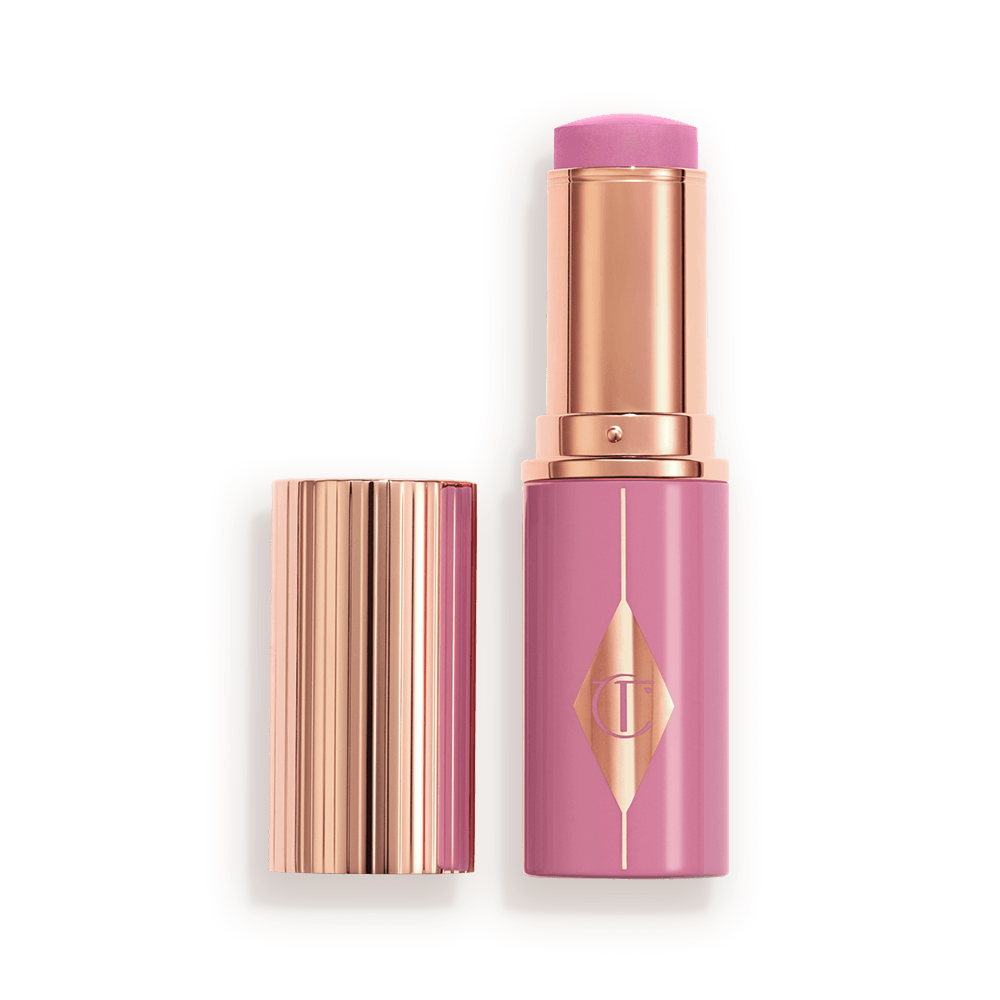
- BEAUTY LIGHT WAND - PINKGASM SUNSET: BEAUTY LIGHT WAND in Pinkgasm Sunset is a liquid highlighter-blush with a radiant rose-pink finish, designed for a dreamy, deeper kiss of colour. Because it is both highlighter and blush in one liquid, you can skip a separate blush layer — which removes one common cause of streaky buildup.
- BEAUTIFUL SKIN ISLAND GLOW LIP & CHEEK - PARADISE PINK GLOW: Beautiful Skin Island Glow Lip & Cheek in Paradise Pink Glow is a cream blush and lip tint that delivers a sun-blushed rose tint for a dewy, healthy-looking glow. If liquid highlighter keeps separating on your skin, this cream formula gives you a coordinated cheek-and-lip flush without the layering conflicts a liquid can cause.
- BEAUTIFUL SKIN SUN-KISSED GLOW BRONZER - 4 DEEP: Beautiful Skin Sun-Kissed Glow Bronzer in 4 Deep is a face and body cream bronzer with hyaluronic acid and sunshine provitamin D3. Cream bronzer applied before highlighter can create a smooth, emollient base — but it needs a few seconds to settle, or a liquid highlighter tapped over it will streak.


